Khaptad National Park, Nepal: Trekking Guide to the Far-West's Hidden Himalayan Wilderness
Khaptad National Park at a Glance
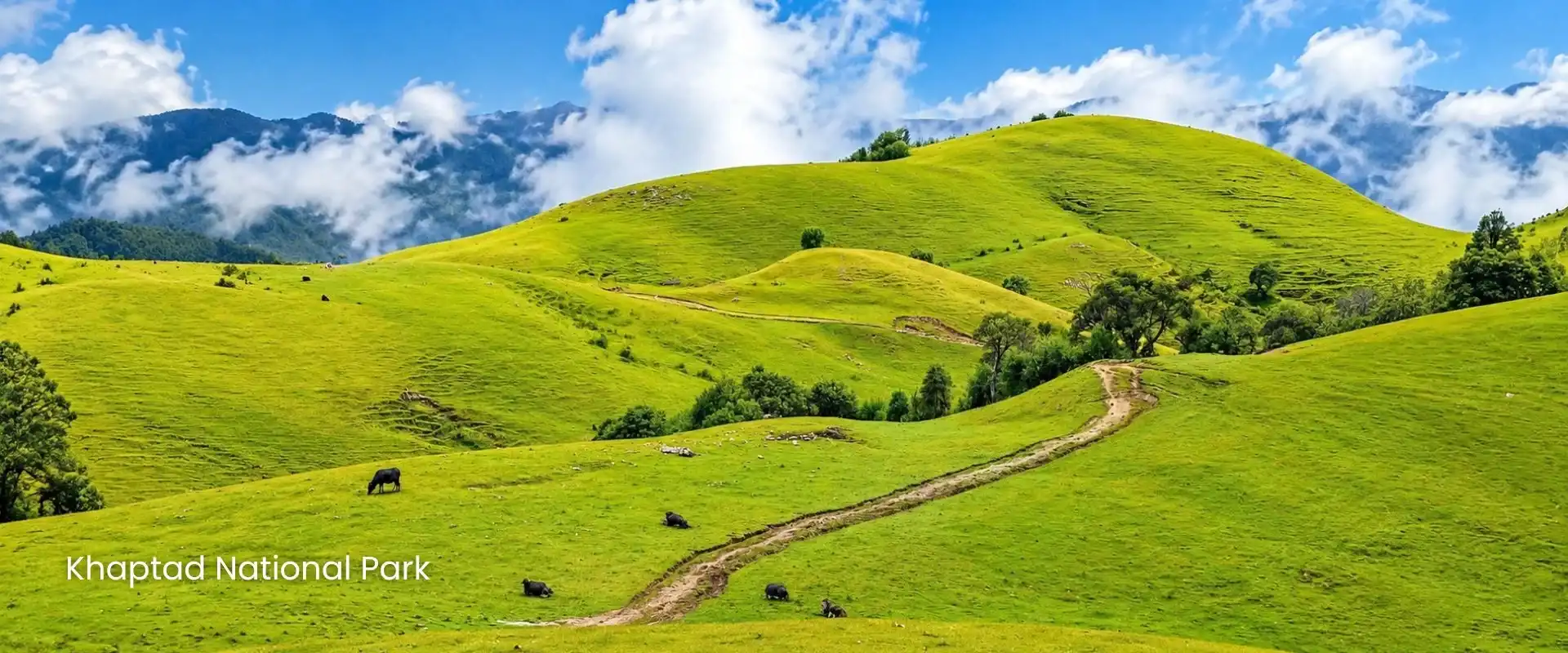
Khaptad National Park is a quiet, high-altitude plateau in Far-Western Nepal, known for rolling grass meadows, forests of oak, fir and rhododendron, and a deep spiritual tradition. It is one of the few places in Nepal where you can trek for days without meeting a crowd.
- Location: Bajhang, Bajura, Doti and Achham districts, Sudurpashchim Province
- Established: 1984
- Area: about 225 sq. km
- Elevation: 1,400 m to 3,300 m
- Known for: meadows (patan), birdwatching, medicinal herbs, Khaptad Baba's ashram, quiet trekking
- Trek length: about 4 to 5 days round trip from Silgadhi
- Best seasons: March to May and October to November
The park sits on the watershed between the Karnali and Seti river systems. It protects a rare transition from mid-hill forest to subalpine grassland, which is why so much wildlife, bird life and plant life lives in a small area.
Why Visit Khaptad?
Most of Nepal's famous treks are busy and well-serviced. Khaptad is different. Lodges are few, trails are quiet, and the pace is slow. You come here for:
- Silence and space: wide open meadows and almost no crowds
- Spiritual heritage: the ashram of Khaptad Baba and several sacred sites
- Biodiversity: forests, grasslands, birds and a large number of medicinal plants
- Authentic Far-West culture: village stays, local food and hill hospitality
Things to Do in Khaptad National Park
- Trek through forests and meadows on gentle plateau trails
- Watch birds in oak, fir and rhododendron forest
- Camp under clear night skies away from any town lights
- Visit sacred places and spend time in quiet reflection
- Walk to viewpoints for sunrise views over the far-western Himalayan ranges
Main Attractions Inside the Park
- Khaptad Baba Ashram: the hermitage of the revered saint Khaptad Baba, near the park headquarters. It is the spiritual centre of the park.
- Khaptad Lake: a small, peaceful lake in the meadows, linked to local religious traditions.
- Tribeni: a holy confluence where three streams meet, visited by pilgrims.
- Sahashra Linga: the highest point of the park, at around 3,300 m, with wide views.
- Nagdhunga and Kedardhunga: rock formations and shrines on the plateau.
Wildlife and Birds
Khaptad is protected habitat for Himalayan black bear, barking deer, wild boar, langur and other monkeys, and many smaller mammals. Sightings are never guaranteed, but the quiet forest makes patient walking rewarding.
Birdwatching is a highlight. The park has over 240 recorded bird species, including the Himalayan monal (danphe), Nepal's national bird, along with pheasants, partridges, flycatchers, eagles and hawks. Migratory birds add to the list in autumn and spring.
Forests and Medicinal Plants
The park has three main vegetation zones: subtropical forest in the lower areas, temperate forest of oak and fir, and subalpine grassland on the plateau. It is also known as a living herbal garden, with about 224 recorded medicinal plant species. In spring, rhododendrons and wildflowers colour the hillsides.
How to Reach Khaptad National Park
There are two common routes.
Route 1: Via Dhangadhi and Silgadhi (most popular)
- Fly Kathmandu to Dhangadhi, or take a long road journey.
- Travel by bus or jeep to Silgadhi in Doti.
- Take a local jeep to the Jhigrana entrance gate.
- Trek about 6 to 7 hours to the park headquarters area.
Route 2: Via Chainpur, Bajhang
- Reach Chainpur by road from Dhangadhi, or by flight where services are running.
- Drive towards Tamel and Darugaun.
- Trek from the Lokhada entrance gate, about 5 hours to the headquarters area.
Travel times depend heavily on road and weather conditions in the Far-West. Ghumnajaau arranges transport and local logistics so you do not have to piece this together yourself.
Best Time to Visit Khaptad
| Season |
What to expect |
| March to May |
Rhododendron and wildflower bloom, mild weather. Excellent. |
| June to September |
Monsoon. Wet, leeches and slippery trails. Not recommended. |
| October to November |
Clear skies, stable weather, long views. Excellent. |
| December to February |
Cold, with possible snow on the plateau. Only for prepared trekkers. |
Sample 5-Day Khaptad Itinerary
(Adjustable. Final plan depends on transport, season and group size.)
- Day 1: Dhangadhi to Silgadhi, overnight in Silgadhi
- Day 2: Jeep to Jhigrana Gate, trek to the park
- Day 3: Explore Khaptad Baba Ashram, Khaptad Lake and Tribeni
- Day 4: Morning walk to Sahashra Linga, begin return
- Day 5: Trek out and return to Silgadhi, then Dhangadhi
Accommodation
There are no luxury hotels in the park. Options are:
- Basic lodges with limited beds near the entrance gates and at the headquarters
- Designated camping areas, with a tent and supplies arranged in advance
- Village homestays on the approach routes
Book ahead, especially in spring and autumn. Bring warm clothing even in season, as nights on the plateau are cold.
Entrance Fees and Permits
| Visitor |
Park entry fee (per person) |
| Nepali citizens |
Free |
| SAARC nationals |
NPR 100 |
| Foreign visitors |
NPR 1,000 (plus 13% VAT) |
Fees are usually paid at the DNPWC counter in Kathmandu or at the park, and can change. Ghumnajaau confirms current fees and any extra permits before you travel.
Nearby Attractions
- Ramaroshan (Achham): a scenic highland area known for its group of lakes, local myths and old ruins.
- Badimalika (Bajura): a sacred Himalayan site with the Mallika Devi temple, rooted in Hindu tradition. It is usually visited as a separate, longer trek.
Practical Tips
- Carry cash, as there is little or no ATM or card access
- Pack warm layers, a rain jacket and sturdy boots
- Bring water purification and any personal medicine
- Mobile signal is limited, so plan check-in times
- Respect sacred sites: dress modestly and keep noise low
- Leave no trace and carry out all rubbish
Plan Your Khaptad Trek with Ghumnajaau
Khaptad rewards people who like quiet trails, open skies and a slower journey. Whether you want a short spiritual retreat, a birdwatching trip or a longer Far-West trek, Ghumnajaau can arrange permits, transport, guides, porters and accommodation.
Discover the untouched Himalayas with Ghumnajaau, where every trail tells a story.