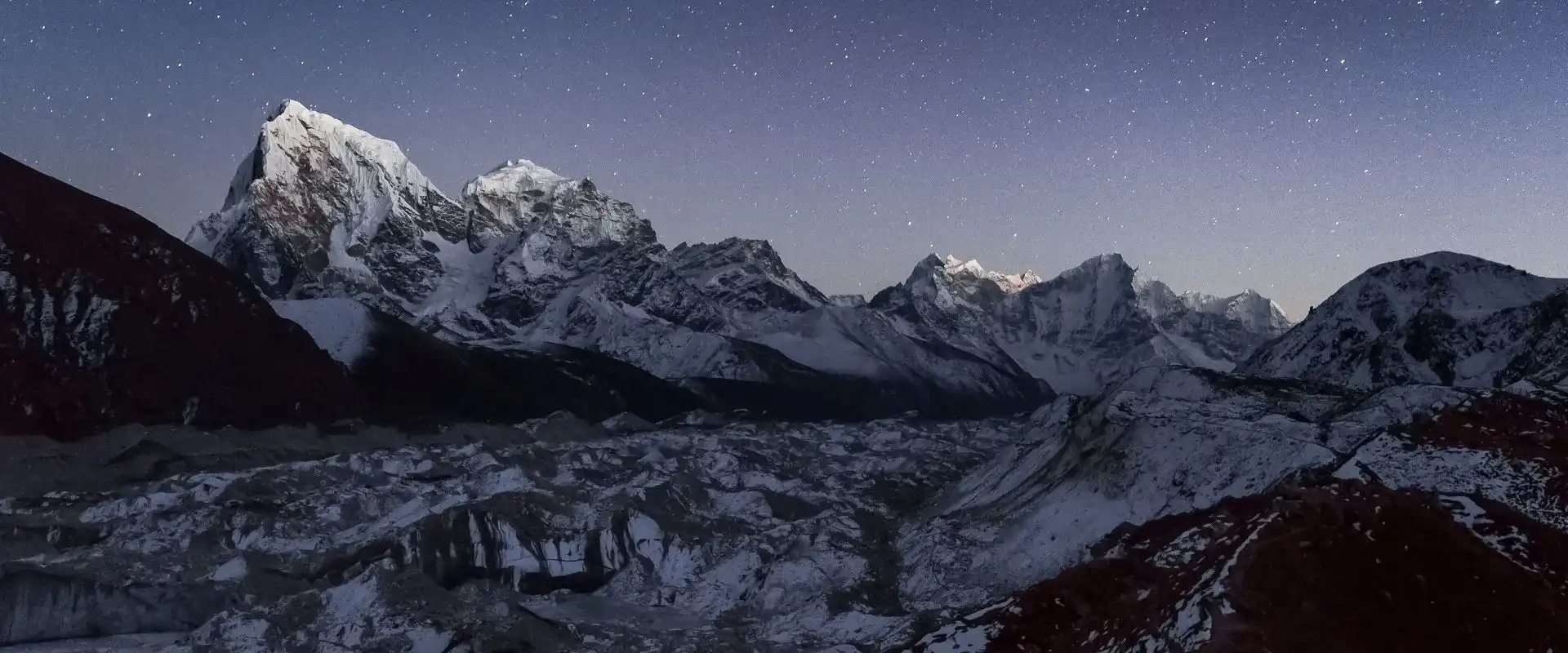
Stand in the shadow of the world’s highest peak, walk through Sherpa villages where prayer flags flutter in the wind, and sleep in mountain lodges beneath Himalayan giants. The Everest region (Khumbu) in Nepal is home to Mount Everest (8,848.86m) and offers some of the world’s best treks, from the classic Everest Base Camp route to remote high passes. This guide covers routes, the best time to go, how to get there, permits and practical tips.
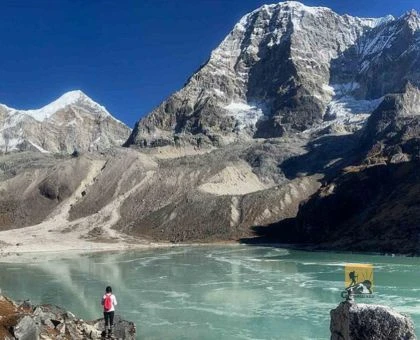
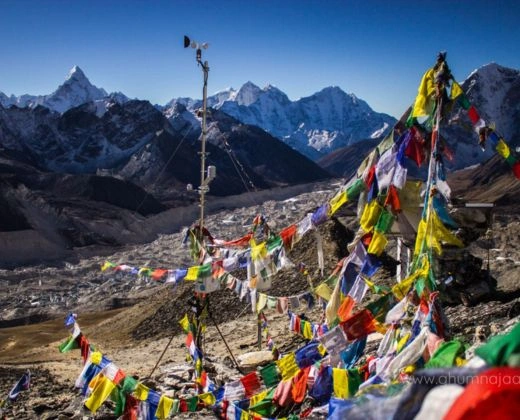
The Everest region lies in northeastern Nepal, mostly inside Sagarmatha National Park, a UNESCO World Heritage Site. Its landscapes range from rhododendron forests and river gorges to glacial valleys and high alpine terrain. Buddhist monasteries, mani walls and prayer wheels shape daily life here.
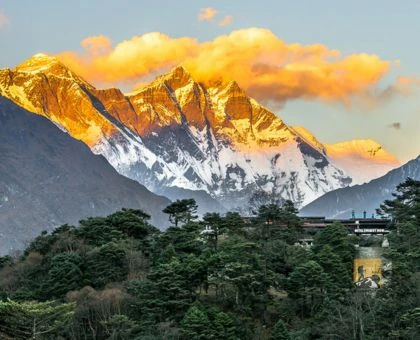
Namche Bazaar, the Sherpa trading hub, is the gateway to most Everest treks. Besides Everest, the skyline includes Lhotse, Nuptse, Makalu and the graceful Ama Dablam
| Location | Solukhumbu District, northeastern Nepal |
| Highest point on popular treks | Kala Patthar (5,545m |
| Everest Base Camp altitude | 5,364m |
| Best seasons | March–May and October–November |
| March–May and October–November | 12–14 days |
| Access | Flight to Lukla, or road to Salleri/Phaplu |
| Accommodation | Tea houses, lodges, camping |
| Trek | Duration | Highlights |
| Everest Base Camp Trek | 12–14 days | Namche, Tengboche, EBC, Kala Patthar |
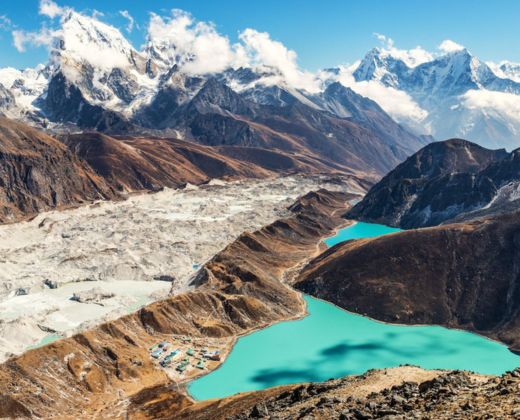
| EBC via Gokyo & Cho La Pass | 14–18 days | Gokyo Lakes, Cho La Pass, EBC |
| EBC via Gokyo & Cho La Pass | 10–13 days | Gokyo Ri, glacial lakes, fewer crowds |
| Renjo La Pass Trek | 11–13 days | Gokyo Ri, glacial lakes, fewer crowds |
| Three High Passes Trek | 17–20 days | Kongma La, Cho La, Renjo La; remote valleys |
| Everest Base Camp Trek by Road | 14–16 days | Drive to Salleri/Surkhe, avoiding the flight |
| Everest View Trek | 5 days | Short trek with Everest views |
| Everest Yeti Trail Trek | 8–11 days | Off-the-beaten-path Khumbu culture |
| Dudh Kunda Trek | 6–8 days | Off-the-beaten-path Khumbu culture |
| Pikey Peak Family Trek | 6–9 days | Gentle trek with big views |
| Mera Peak Climbing | 13–17 days | One of Nepal’s highest trekking peaks (6,476m) |
| Day | Plan |
|---|---|
| 1 | Fly Kathmandu to Lukla, trek to Phakding |
| 2 | Trek to Namche Bazaar |
| 3 | Acclimatization day (Khumjung / Everest View hike |
| 4 | Trek to Tengboche |
| 5 | Trek to Dingboche |
| 6 | Acclimatization day |
| 7 | Trek to Lobuche |
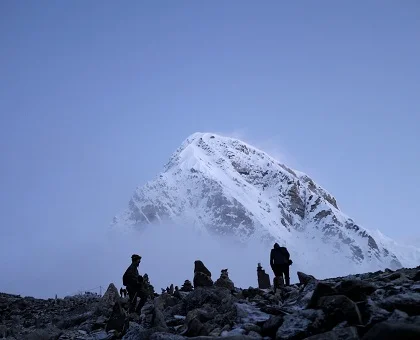
| 8 | Trek to Gorakshep, visit Everest Base Camp, return to Gorakshep |
| 9 | Kala Patthar sunrise, descend to Pheriche or Pangboche |
| 10 | Trek to Namche Bazaar |
| 11 | Trek to Lukla |
| 12 | Fly to Kathmandu |
Add 1–2 buffer days for Lukla flight delays; this makes it a 13–14-day trip.
You need two permits: the Sagarmatha National Park entry permit and the Khumbu Pasang Lhamu Rural Municipality permit. TIMS is no longer required in this region. Ghumnajaau arranges all permits for you. (Confirm current fees before publishing.)
Trekkers need two permits. TIMS is no longer required in the Everest (Khumbu) region.
| Permit | Foreign nationals | SAARC nationals |
|---|---|---|
| Sagarmatha National Park entry permit | NPR 3,000 | NPR 1,500 |
| Khumbu Pasang Lhamu Rural Municipality permit | NPR 3,000 | NPR 2,000 |
| Total per person | NPR 6,000 | NPR 3,500 |
The local municipality permit is issued at Lukla, and the national park permit is checked at the Monjo entrance gate. Ghumnajaau arranges both permits for you as part of your trek package
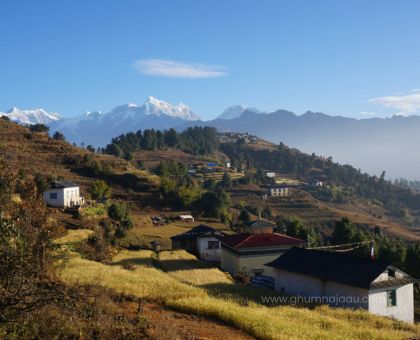
The Sherpa people are known for mountaineering skill and warm hospitality. Buddhism shapes daily life, and festivals such as Mani Rimdu at Tengboche are a highlight (dates follow the lunar calendar, usually autumn). Common foods include dal bhat, Sherpa stew, momos, and Tibetan bread with butter tea. Always walk clockwise around mani walls and stupas.
How difficult is the Everest Base Camp trek?
It is moderate to challenging. The main difficulty is altitude, not technical climbing. Good fitness and proper acclimatization matter most.
How many days do you need for the Everest region?
Plan 12–14 days for Everest Base Camp. Shorter options, such as the 5-day Everest View Trek, suit limited time.
Do I need a guide for the Everest region?
A guide is strongly recommended for safety and logistics, even where it is not required.
When is the best month to trek in the Everest region?
October–November for clear views, March–April for flowers and warmer weather.
Can I reach the Everest region without flying to Lukla?
Yes. Drive to Salleri and start trekking from Surkhe, or walk the classic Jiri route.
Whether you dream of Everest Base Camp, the turquoise lakes of Gokyo or the high passes of Khumbu, our team handles permits, flights, guides and lodges. Contact Ghumnajaau today to plan your Everest region trek.




We create unforgettable trips, customized for your group.