Ghumnajaau | Last updated October 2026
Badimalika is one of the most revered temples in Far West Nepal and one of the least-visited trekking destinations in the country. It sits at about 4,200 m in Bajura District, Sudurpashchim Province, on open alpine grassland where pilgrims, shepherds and a few trekkers share the same trail.
There are no big lodges and no crowded trail towns here. The trek runs from a remote roadhead through forest, high pasture and the sacred Triveni confluence, then up to the Badimalika shrine. If you want a pilgrimage, a camping trek and real local culture in one journey, this is a strong choice.
Ghumnajaau runs Badimalika as a guided 13-day trek with tented camping, local cultural stops and a full-board trekking section.
|
Detail |
Information |
|
Location |
Triveni area, Bajura District, Sudurpashchim Province, Far West Nepal |
|
Main attraction |
Badimalika Temple, dedicated to Goddess Bhagwati (Malika) |
|
Temple elevation |
About 4,200 m (13,780 ft); sources quote 4,200–4,219 m |
|
Triveni Dham |
About 3,870 m, the main stop before the temple |
|
Trip length |
13 days, including Kathmandu, flights, road transfers and trekking |
|
Difficulty |
Moderate to challenging (long drives, steep climbs, camping, altitude) |
|
Trek style |
Guided, tented camping, remote and basic |
|
Start / end |
Jadanga / Martadi (Ghumnajaau itinerary) |
|
Best seasons |
April–June and September–November |
|
Festival |
Janai Purnima pilgrimage (usually August) |
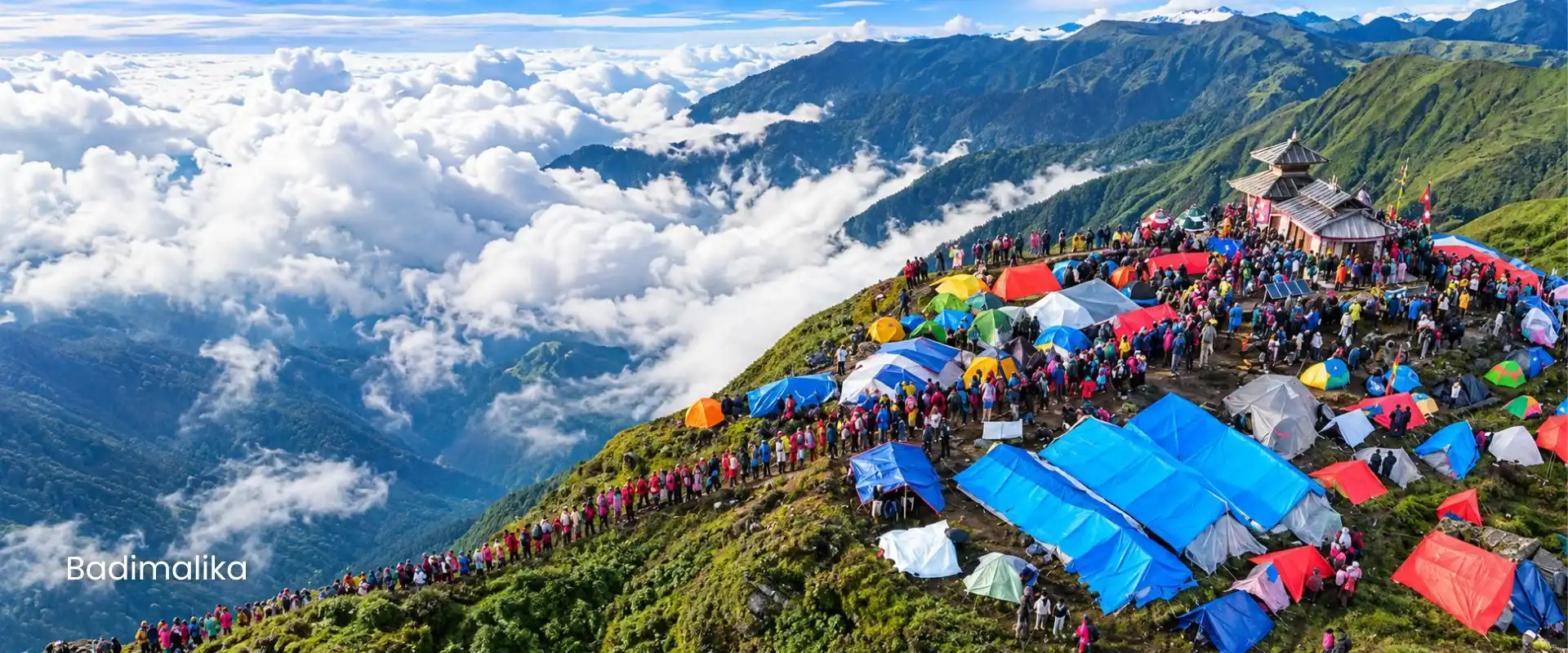
The two-storey pagoda-style shrine stands on a hilltop near the meeting point of Bajura, Achham, Kalikot and Jumla. It is dedicated to the goddess Bhagwati, known locally as Malika, and is regarded as one of the major Shakti shrines of the Far West. Local belief describes Badimalika as the eldest of the region’s goddess sisters.
The final climb from Triveni is steep and often cold in the morning. Reaching the shrine at sunrise is the highlight of the trek.
Triveni is a high pasture and a sacred confluence of streams, and pilgrims traditionally bathe here before walking to the temple. It is also your main overnight stop before the shrine, at roughly 3,870 m. Sleeping here lets the body adjust before the final climb.
The grasslands around Triveni and the temple are the scenic centre of the trek. In the right season they are green and full of wildflowers, with wide views in every direction.
On clear days you can see snow peaks of the far western Himalaya from the higher sections. Visibility depends on season and weather, so plan for early mornings.
The approach passes through farming settlements where life follows the agricultural calendar. Expect simple homes, local food, village temples and hospitality that is not set up for tourists.
Thousands of pilgrims climb to Badimalika around Janai Purnima, which usually falls in August. The atmosphere is powerful, but it is also monsoon season. Trails can be wet and slippery, and transport and camping space are in short supply. Book early and expect crowds.
The Ghumnajaau trek follows this sequence:
Add the exact day-by-day schedule, daily walking hours and camp altitudes from the package itinerary here. Walking times and camp names should match what your guides actually use.
Badimalika is remote, so the journey is part of the trip. The usual route combines a flight, long mountain drives and a multi-day walk.
The road between Dhangadhi and Martadi is long, often 10 to 12 hours, and can be slower after rain or landslides. Another option for travellers is a flight from Nepalgunj to Bajura, followed by a walk to Martadi. Mention flexibility in the itinerary and always keep a spare day before your international departure.
Spring (April to June)
One of the two best seasons. Days are warmer, hills turn green and wildflowers begin to appear. Nights at Triveni and the temple remain cold.
Best for: trekking, scenery, photography.
Monsoon (July to August)
The landscape is lush and the Janai Purnima pilgrimage takes place in this window. But heavy rain brings leeches, slippery trails, landslides and road delays.
Best for: pilgrims and experienced travellers who accept the risks.
Autumn (September to November)
The other prime season. Skies are clearer after the monsoon, the air is crisp and mountain visibility is at its best.
Best for: views, photography and stable trekking weather.
Winter (December to March)
Heavy snow and freezing temperatures can cover the upper trail and the temple area. Camping is hard and some sections may be impassable.
Best for: very experienced winter trekkers only. We do not recommend regular departures in this season.
Permit rules and fees for this area can change, so confirm them before you book.
Accommodation
Expect hotel stays in Kathmandu and Dadeldhura and tented camping during the trek. Facilities on the trail are basic: limited electricity, patchy mobile signal, simple washing and cold nights at height. Your team carries tents, sleeping mats and cooking equipment.
Food
The trekking section is full board, prepared by the camp kitchen team. Meals are simple and filling:
Breakfast is included in Kathmandu. Lunch and dinner in Kathmandu are not included. Please tell us about allergies or dietary needs before departure, since choices are limited in the mountains.
Badimalika is a moderate-to-challenging trek. The difficulty comes less from technical terrain and more from the combination of long road transfers, steep sustained climbs, camping and altitude over 3,800 m. You do not need climbing experience, but you should be comfortable walking 5 to 7 hours a day with a daypack over several days. Start regular hiking, stairs or cardio training four to six weeks before departure.
How high is Badimalika Temple?
About 4,200 m (13,780 ft). Some sources quote up to 4,219 m.
Where is Badimalika?
In the Triveni area of Bajura District, Sudurpashchim Province, Far West Nepal.
How difficult is the Badimalika Trek?
Moderate to challenging. The route is not technical, but the road journeys, steep climbs and camping make it demanding.
How many days do I need?
Ghumnajaau’s itinerary takes 13 days, including Kathmandu, flights and road transfers.
When is the best time to go?
April to June and September to November. Janai Purnima in August is a pilgrim season with large crowds and monsoon conditions.
Can I trek Badimalika without a guide?
We do not recommend it. The area is remote, routes are lightly marked and support is limited.
Ghumnajaau has been organising treks and tours in Nepal since 2013. Our Badimalika Trek covers all transport, permits, guides, camping support and meals on the trek, and we can adapt departure dates for groups, families and pilgrim parties.
Contact Ghumnajaau for the latest price, departure dates and custom options.
We create unforgettable trips, customized for your group.